


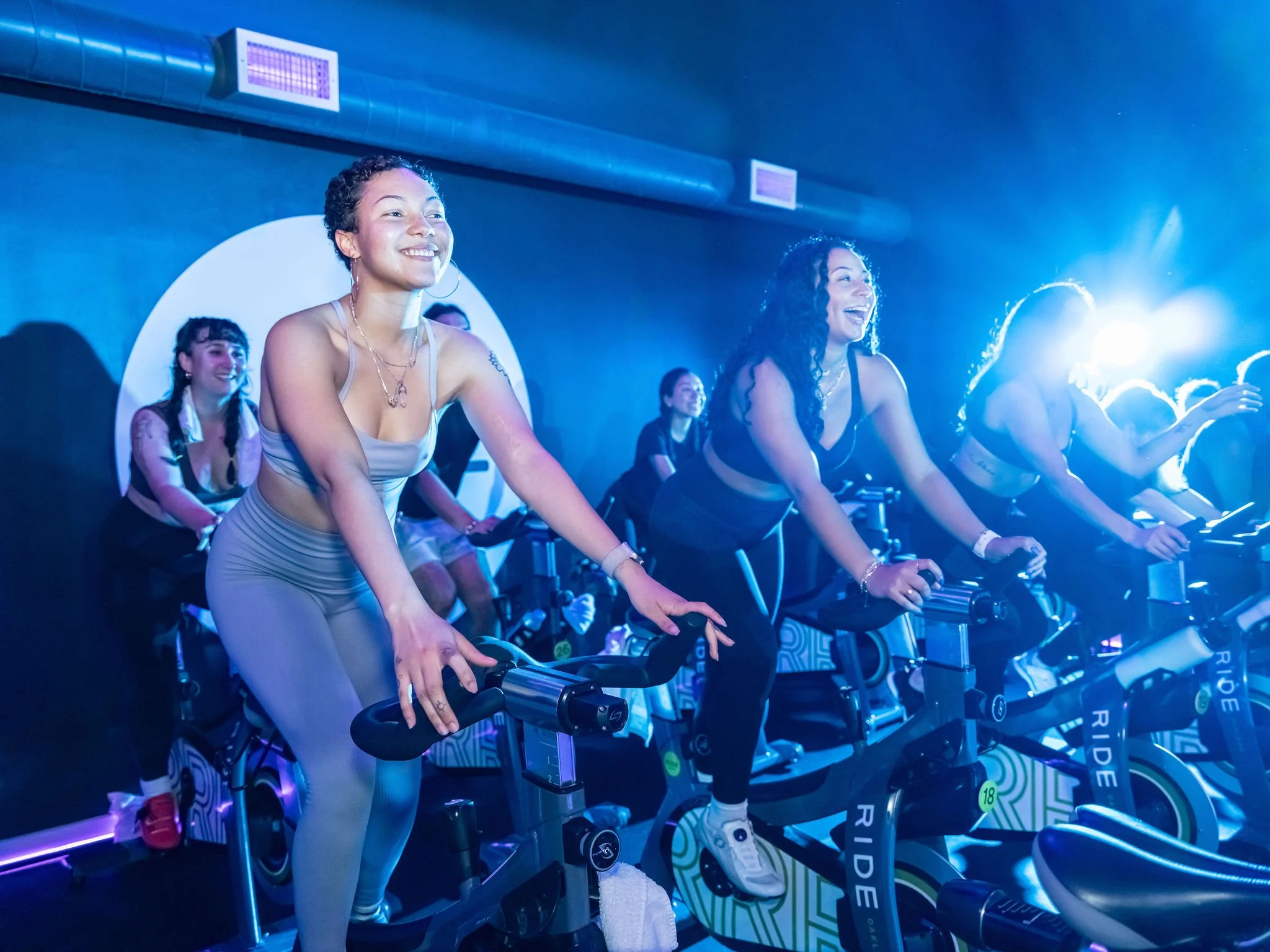
Heavy resistance changes the rider’s relationship with the bike. The legs must produce more torque, the trunk must transmit force, and the hands help stabilise the torso. Some upper-body activity is therefore necessary. The problem begins when useful stability becomes excessive gripping, shoulder elevation, locked elbows and breath-holding.
During an indoor spin class, unnecessary upper-body tension does not simply look uncomfortable. It increases perceived effort, competes with efficient breathing and can hide a resistance level the legs cannot control independently. The goal is not to make the upper body completely passive. It is to use only the tension required to stabilise the task.
Stability and Rigidity Are Not the Same
A stable rider keeps the pelvis controlled, maintains a repeatable torso position and allows force to pass into the pedals. A rigid rider freezes the shoulders, elbows, wrists and ribcage. Both may appear still, but the muscular cost is different.
Useful stability is adaptable. The arms can absorb small movements, the shoulders remain away from the ears and the rider can change grip without losing control. Rigidity removes that adaptability. When cadence changes or fatigue rises, the body has fewer options and may begin rocking or pulling.
The cue “keep still” can therefore be counterproductive if interpreted as “contract everything”. A better cue is “quiet where possible, active where necessary”.
Gripping the Handlebars Creates a Chain Reaction
An excessively tight grip recruits the forearms and often spreads tension upward into the upper arms, shoulders and neck. Elbows may lock, transferring vibration and movement directly into the torso. The rider then feels as if more effort is required simply to remain on the bike.
Grip pressure can also become a pacing clue. If the hands tighten every time resistance increases, the load may be approaching the rider’s controllable limit. Ask the rider to soften the fingers briefly. If cadence immediately collapses or the torso becomes unstable, the hands were doing more than providing balance.
This does not mean riding with loose, unsafe hands. Maintain secure contact, particularly during standing efforts, while avoiding a white-knuckle grip.
Raised Shoulders Restrict Breathing Comfort
As intensity rises, accessory breathing muscles around the neck and upper chest may become more active. If the shoulders are already elevated and rigid, breathing can feel crowded. The rider may respond with faster, shallower breaths, which further increases the sensation of strain.
The interaction is perceptual as well as mechanical. Tight shoulders signal effort to the rider. Releasing them can make the same resistance feel more manageable even when power does not change.
A practical reset is to exhale fully, slide the shoulders away from the ears and widen the collarbones without forcing the chest upward. The rider should still maintain trunk support. The objective is space for breathing, not an exaggerated posture.
Breath-Holding Often Appears at Peak Torque
During a heavy pedal stroke, riders may briefly brace and hold their breath. Short, task-specific bracing is common in forceful movement, but repeated breath-holding across a long climb can increase discomfort and disrupt rhythm.
Listen for silence during the hardest part of the interval followed by a sudden gasp. That pattern suggests the rider is using breath-holding to manufacture stiffness. Reducing resistance slightly and restoring a continuous exhalation may improve sustainable output.
Breathing cues should remain simple. Trying to synchronise every breath perfectly with the pedal stroke can create another cognitive burden. First maintain airflow, then refine rhythm if useful.
Trunk Rigidity Can Hide Poor Bike Setup
Excess reach to the handlebars may force the rider to support too much weight through the hands. Handlebars set too low for current mobility may encourage shoulder elevation or a collapsed chest. A saddle position that creates instability may cause the rider to pull on the bars for balance.
Before blaming concentration or strength, review setup. The rider should be able to reach the bars with soft elbows and maintain a supported torso without sliding forward. Adjustments should be tested under moderate resistance, because an unloaded warm-up may not expose the problem.
Persistent neck, shoulder, wrist or back discomfort requires more than a cue. Stop or modify the provoking work and seek appropriate professional assessment when symptoms recur or interfere with normal function.
High Resistance Magnifies Compensation
As torque demand rises, the rider may use the handlebars as leverage. In a standing climb, some side-to-side movement can be part of the technique. The issue is whether arm pulling becomes the main way the rider gets through the stroke.
Signs that resistance has exceeded controllable load include shoulders rocking dramatically, elbows repeatedly flexing to haul the body forward, cadence stalling at the same crank position and the pelvis shifting with every revolution.
Reducing resistance by a small amount often improves both cadence and upper-body quietness. If the interval remains hard at the corrected load, training quality has not been lost. It has been redirected to the intended muscles and movement.
Use the Hands-Off Test Carefully
For a seated, moderate-load segment, an instructor may ask riders to lighten hand pressure for a few seconds while keeping hands in contact with the bars. This is not a balance trick. It is a diagnostic check.
If the rider can reduce pressure without changing cadence or pelvic position, the previous grip was probably unnecessary. If the torso collapses, the rider may need better trunk support, a setup adjustment or a lower resistance. The test should not be used during fast standing work or where safety is uncertain.
Another self-check is the finger tap. The rider briefly taps each finger against the bar. If this feels impossible, grip tension is probably higher than needed.
Match Tension to the Phase of the Interval
Upper-body tension should not remain constant. During acceleration, the rider may need more stabilisation. Once cadence settles, tension should reduce. During recovery, hands, jaw and shoulders should visibly soften.
Failure to release during recovery carries fatigue into the next repetition. The legs may be unloaded while the upper body remains braced, keeping RPE elevated. This is one reason riders can feel exhausted despite modest power.
An efficient sequence is brace, produce, settle and release. Practising the release is as important as practising force.
Create a Four-Point Technique Scan
During the final third of a heavy interval, check four areas:
Hands
Secure but not clenched. Wrists remain close to neutral rather than sharply bent.
Elbows
Soft enough to absorb movement, not locked or pulling continuously.
Shoulders and Jaw
Shoulders remain away from the ears and the jaw is not tightly clenched.
Breathing and Pelvis
Air continues to move, while the pelvis remains stable enough to support a repeatable pedal stroke.
If several points fail together, adjust resistance before adding more posture cues.
Efficiency Is the Absence of Unnecessary Work
The current cycling programmes at TFX Singapore emphasise resistance, cadence, posture, power, hills and interval training. These formats provide repeated opportunities to practise selective tension rather than maximum tension.
The rider should finish a high-resistance interval because the target muscles and energy systems were challenged, not because the hands, neck and jaw joined the effort unnecessarily. Efficient cycling is not visually motionless. It is mechanically purposeful.
Frequently Asked Questions
Should my upper body be completely relaxed during a climb?
No. The trunk and arms provide useful stability. The goal is to remove excessive gripping and rigidity while preserving secure control.
Why do my hands become numb during spin class?
Excess hand pressure, wrist position and bike setup may contribute, but numbness has several possible causes. Adjust pressure and setup, and seek professional assessment if it persists.
Can lowering resistance improve power?
It can if excessive resistance is causing cadence stalls and upper-body compensation. A slightly lower load may allow smoother torque production and more repeatable output.
What is the quickest tension reset?
Complete a controlled exhalation, soften the fingers, unlock the elbows and lower the shoulders. Then reassess whether the selected resistance remains manageable.
